

One Filling Wont Fix It: Full Mouth Rehab Guide
 September 1, 2026
•
by admin
September 1, 2026
•
by admin

Some dental problems cannot be fixed with a single filling or one visit. When multiple teeth are damaged, missing or affected by years of neglect, injury or decay, a more comprehensive approach is needed. That is what full mouth rehabilitation is designed for.
This guide explains what full mouth rehabilitation actually means, who typically needs it, and what the process looks like from the first consultation to the final result.
What Is Full Mouth Rehabilitation
Full mouth rehabilitation, sometimes called full mouth reconstruction, is a combination of dental treatments used to restore the health, function and appearance of your entire mouth. Unlike a single procedure, it is a customised treatment plan that may include several different services working together.
It is not a one size fits all package. Every plan is built around the specific problems a patient has, which is why the first consultation is so detailed.
Who Needs Full Mouth Rehabilitation
Full mouth rehabilitation is usually recommended for patients dealing with a combination of issues rather than a single isolated problem. Common situations include:
- Multiple missing teeth affecting chewing and speech
- Severe tooth wear from grinding or acid erosion
- Widespread decay across several teeth
- Jaw pain or bite problems affecting the whole mouth
- Trauma or injury that has damaged multiple teeth
- Long term neglect leading to a combination of the above
If you find yourself avoiding certain foods, dealing with ongoing jaw discomfort, or feeling self conscious about the state of your teeth overall, it may be worth discussing a full evaluation with a dentist.
What Full Mouth Rehabilitation May Include
Since every case is different, treatment plans vary widely, but they often draw from the following:
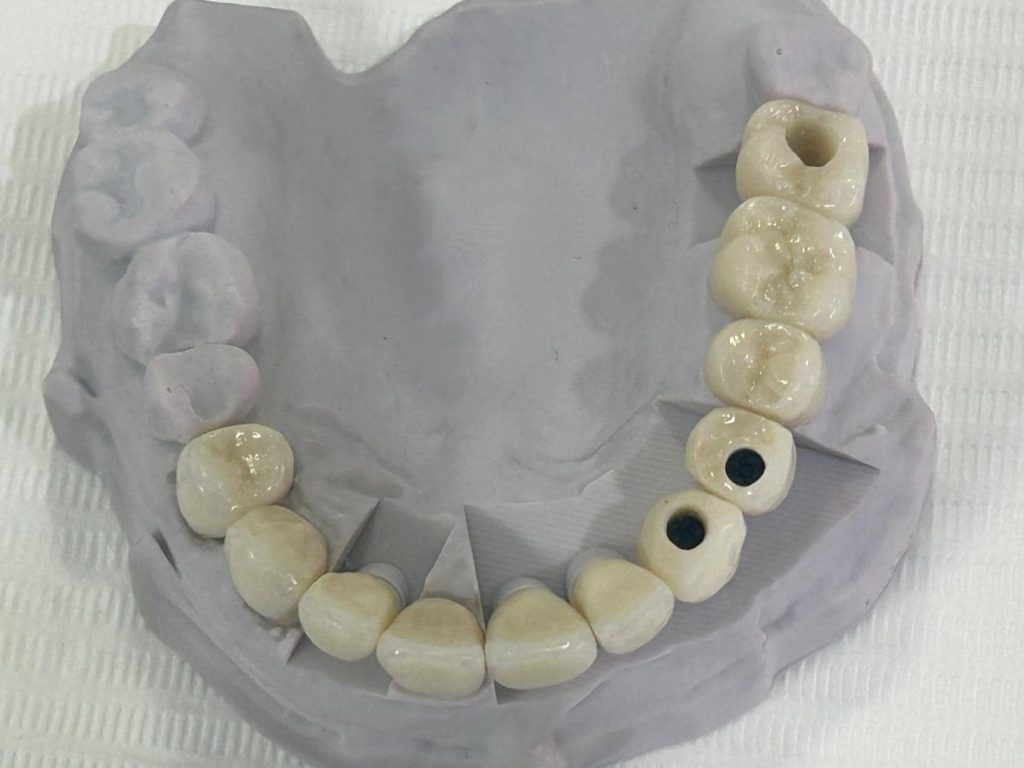
Restorative Treatments
- Dental crowns to protect and strengthen damaged teeth
- Bridges to replace missing teeth using neighbouring support
- Dental implants for a more permanent tooth replacement option
- Root canal treatment for infected or severely decayed teeth
- Fillings for smaller areas of decay
Prosthetic Solutions
- Complete or partial dentures for patients with extensive tooth loss
- Implant supported dentures for a more stable, secure fit
Additional Support
- Gum treatment if periodontal disease is contributing to the problem
- Bite correction to address jaw alignment issues
- Cosmetic touches like teeth whitening or contouring, once the functional work is complete
The Full Mouth Rehabilitation Process
Step 1: Comprehensive Evaluation
This is the most important step. Your dentist will take X-rays, photographs and possibly digital scans to understand the full picture, not just the obvious problem areas. Bite alignment, gum health and jaw function are all assessed.
Step 2: Treatment Planning
Based on the evaluation, your dentist builds a phased plan. This usually starts with addressing urgent issues like infection or pain, followed by structural work, and finally cosmetic refinements.
Step 3: Phased Treatment
Full mouth rehabilitation is rarely completed in a single visit. It typically unfolds over weeks or months, depending on how many procedures are involved and how your mouth heals between stages.
Step 4: Review and Adjustments
Once the core treatments are complete, your dentist will check your bite, comfort and appearance, making small adjustments as needed before finalising the plan.
How Long Does Full Mouth Rehabilitation Take
Timelines vary significantly based on the complexity of the case. A plan involving a few crowns and a bridge might take a couple of months, while one involving implants, bone grafting or extensive restorative work can take six months to a year or more. Your dentist will give you a realistic timeline once your evaluation is complete.
Full Mouth Reconstruction Cost Factors
Cost depends heavily on what your specific plan includes. Some of the main factors are:
- Number of teeth being treated
- Types of restorations used, such as crowns versus implants
- Whether gum treatment or bone grafting is needed
- Materials selected for crowns, bridges or dentures
- Number of visits required to complete the plan
Because plans are so individualised, it is best to get a detailed written estimate after your evaluation rather than comparing general price ranges.
Comparing Restoration Options Within a Rehabilitation Plan
| Option | Best For | Permanence |
|---|---|---|
| Dental implants | Single or multiple missing teeth, strong jawbone | Long term, most permanent |
| Fixed bridge | Missing teeth with healthy neighbouring teeth | Long term, fixed in place |
| Implant supported denture | Extensive tooth loss, wanting stability | Long term, removable by dentist only |
| Complete denture | Full arch tooth loss, budget conscious | Removable, needs periodic adjustment |
What Recovery Looks Like
Since full mouth rehabilitation involves multiple procedures, recovery happens in stages rather than all at once. You might have a few days of soreness after an extraction or implant placement, followed by a healing period before the next stage begins.
Your dentist will guide you through what to eat, how to care for treated areas, and when it is safe to move to the next step in your plan.
Life After Full Mouth Rehabilitation
Patients who complete full mouth rehabilitation often describe it as life changing, not just for their smile but for everyday comfort. Eating without pain, speaking clearly and feeling confident in photos are common improvements patients mention once treatment is complete.
Maintaining the results comes down to the basics: brushing, flossing, regular checkups, and addressing small issues before they grow into bigger ones.
Frequently Asked Questions
1. How is full mouth rehabilitation different from a regular dental treatment?
Regular treatment usually addresses one issue at a time, while full mouth rehabilitation is a coordinated plan covering multiple problems across the entire mouth.
2. Is full mouth rehabilitation painful?
Individual procedures are done under anesthesia, so pain during treatment is minimal. Some soreness during recovery stages is normal and manageable.
3. How long does the entire process take?
It varies widely based on complexity, ranging from a couple of months to about a year for more extensive cases.
4. Will I need to be without teeth at any point during treatment?
In most cases, your dentist plans the sequence to avoid extended periods without functional teeth, using temporary solutions where needed.
5. Is full mouth rehabilitation only for older patients?
No. While tooth wear and loss are more common with age, patients of any age dealing with trauma, extensive decay or multiple missing teeth may need this type of comprehensive care.
Take the First Step Toward a Restored Smile
Full mouth rehabilitation can feel overwhelming to think about, but it starts with just one detailed evaluation. From there, your dentist can build a plan that fits your specific needs, timeline and budget.
If you are dealing with multiple dental issues and are not sure where to start, book a consultation with Ishtaa Dental in Shilaj or South Bopal to get a clear, honest evaluation of your options.