

Bleeding Gums? What Does It Mean and When Should You Visit a Dentist?
 November 18, 2026
•
by Ishtaa Dental
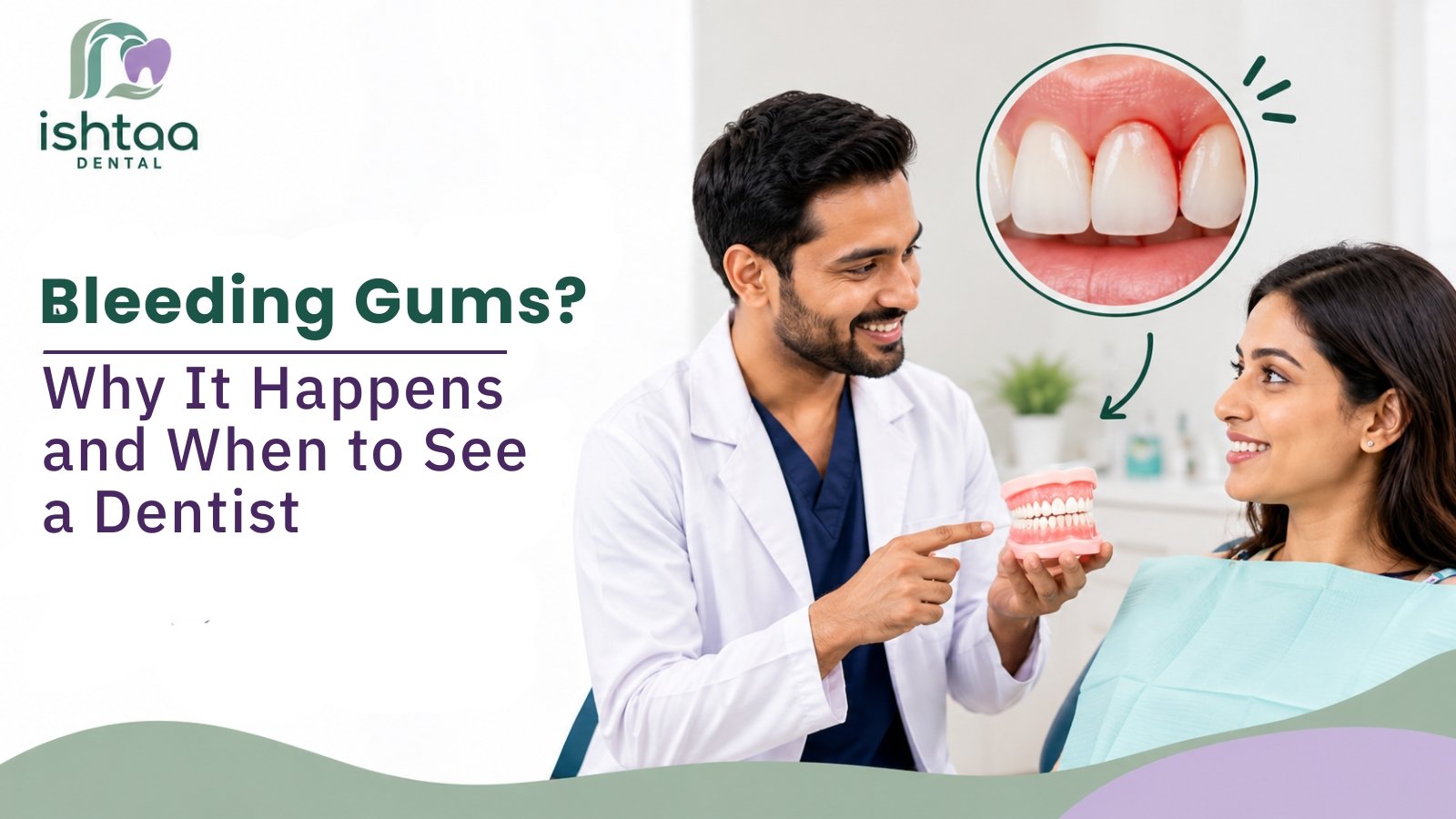
Bleeding Gums? What Does It Mean and When Should You Visit a Dentist?
Have you ever noticed blood in the sink while brushing your teeth? Or perhaps your gums bleed when you bite into an apple or floss. Many people disregard it and simply go about their day.
But ignoring bleeding gums can be a mistake. Healthy gums should not bleed when brushing or flossing. Sometimes, the reason is as simple as brushing too hard. At other times, it might indicate gum disease or another oral health concern that requires attention.
So, let’s understand why gums bleed, what you can do about it and when you should visit a dentist.
Is It Normal for Gums to Bleed?
No, bleeding gums are not normal. Even if you notice a minimal amount of blood, it is worth paying attention to.
Your gums serve as a protective barrier for the roots of your teeth and the surrounding bone. When they become irritated or swollen, they may start bleeding while brushing, flossing or eating.
If it happens just once because you’ve brushed too hard, it may not be a serious concern. However, if you notice blood regularly, there might be an underlying issue.
The key is not to neglect it or assume that it will disappear by itself.
Common Reasons for Bleeding Gums
There are several reasons why gums might bleed. Some have to do with your everyday brushing habits, while others may require dental care.
1. Plaque Build-Up
One of the most common causes of bleeding gums is plaque.
Plaque is a sticky layer of bacteria that collects on your teeth throughout the day. It develops when food particles combine with bacteria in your mouth. If you don’t brush your teeth properly, plaque starts accumulating around the gum line.
Over time, this can irritate your gums, causing them to become red, swollen and more likely to bleed.
Brushing twice a day and flossing between your teeth can help control plaque before it contributes to bigger problems.
2. Brushing Too Hard
When it comes to dental health, the problem isn’t always with your teeth but sometimes with how you brush them.
Applying excessive pressure or using a toothbrush with stiff bristles can damage your gums. You might experience bleeding, tenderness or mild swelling after brushing.
Try switching to a soft-bristled toothbrush and making gentle circular movements while brushing. You don’t need to press hard to clean your teeth properly.
Brushing gently is always better than scrubbing your teeth with excessive force.
3. Gingivitis (Early Gum Disease)
Gingivitis is the initial stage of gum disease. It typically develops when plaque remains on your teeth for too long.
Your gums might appear red, feel swollen or bleed when you brush. Some people also experience persistent bad breath.
The good news is that gingivitis can usually be treated with professional dental cleaning and better oral hygiene. Your dentist might recommend a professional cleaning to remove plaque and hardened deposits from your teeth.
Getting the problem checked early can help prevent it from becoming more serious.
4. Not Flossing Regularly
When you don’t floss regularly, food particles and plaque can accumulate between your teeth. These are areas that your toothbrush might not clean effectively.
If you start flossing after a long break, your gums may bleed during the first few days. This can happen because your gums are already irritated.
Even if you notice a little blood, don’t stop cleaning between your teeth. Use floss gently and avoid forcing it against your gums.
If the bleeding continues, seek advice from a dental professional.
5. Vitamin Deficiency
The food you eat also plays an important role in maintaining healthy gums.
Not getting enough vitamin C can affect gum health and make your gums more likely to bleed. Vitamin K is also necessary for proper blood clotting, and insufficient levels may contribute to bleeding problems.
Including nutrient-rich foods such as fruits, vegetables, nuts and other healthy options can support good oral health.
However, bleeding gums don’t always indicate a vitamin deficiency. If the problem persists, it’s better to get a check-up rather than start taking supplements on your own.
6. Hormonal Changes
Hormonal changes can also make your gums more sensitive.
Many women notice that their gums become swollen or bleed more easily during pregnancy, menstruation or other periods of hormonal fluctuations.
This happens because changes in hormone levels can affect how your gums respond to plaque.
During these times, maintaining proper oral hygiene through regular brushing and flossing becomes even more important.
7. Certain Medicines and Health Conditions
Certain medications, including blood thinners, can make bleeding more likely. Health conditions such as diabetes and disorders affecting blood clotting may also affect gum health.
If your gums started bleeding after you began taking a new medicine, inform your doctor or dentist.
When Should You Visit a Dentist?
A single instance of bleeding may not be a reason to panic. However, regular bleeding is something you should get checked.
Schedule a dental appointment if you notice:
- Gums bleed almost every time you brush or floss.
- Gums appear red, swollen or tender.
- Experience persistent bad breath that doesn’t go away.
- Gums seem to be pulling away from your teeth.
- Notice pus around your gums.
- Teeth feel loose or uncomfortable when chewing.
- Bleeding continues even after improving your brushing habits.
If you experience heavy bleeding that doesn’t stop, seek urgent medical or dental attention.
It’s always better to identify what’s causing the problem rather than wait until the situation gets worse.
How to Prevent Bleeding Gums
The first step is to take better care of your mouth. A few small changes to your everyday routine can make a difference.
1. Brush twice a day: Brush your teeth twice daily, once in the morning and again before going to bed. Use a soft-bristled toothbrush and clean your teeth gently.
2. Don’t skip flossing: Food particles and plaque can get trapped between your teeth. Clean these areas once a day using dental floss or another suitable cleaning tool.
3. Use fluoride toothpaste: Fluoride helps protect your teeth against cavities. Choose a toothpaste that meets your dental needs.
4. Stay hydrated: Drinking enough water helps wash away food particles and prevents your mouth from becoming too dry.
5. Maintain a balanced diet: Include fruits, vegetables and foods containing essential vitamins. Try to limit sugary snacks and drinks.
6. Avoid smoking: Smoking damages your gums and increases the risk of gum disease. It can also make it harder for your gums to heal.
7. Schedule regular dental check-ups: Regular dental examinations can help detect gum problems early, when they are generally easier to treat.
Remember, while these habits can help maintain healthy gums, they cannot replace professional dental treatment if you already have gum disease.
Can Bleeding Gums Eventually Lead to Tooth Loss?
Yes, untreated gum disease can eventually cause tooth loss.
In its early stages, gum disease affects the gums, causing redness, swelling and bleeding. In more advanced cases, the infection can spread deeper into the tissues and bone that support your teeth.
As these supporting tissues become damaged, your teeth may start feeling loose. In severe situations, they might even fall out or need to be removed.
This is why early treatment is so important. Gum problems are generally much easier to manage when identified in their initial stages.
Take Care of Your Gums, Not Just Your Teeth
Keeping your gums healthy is just as important as maintaining clean teeth. Unfortunately, many people focus on brushing their teeth and forget to pay attention to their gums.
Brushing twice a day is essential, but it isn’t enough on its own. You also need to clean between your teeth and regularly check the condition of your gums.
If you notice bleeding while brushing, don’t panic. But don’t ignore it either. Pay attention to your brushing technique, maintain a consistent oral hygiene routine and consult a dentist if the bleeding continues.
Even minor dental problems can develop into bigger concerns when left untreated. Taking care of your gums today can help you avoid unnecessary discomfort and dental procedures in the future.