

 5 Min Read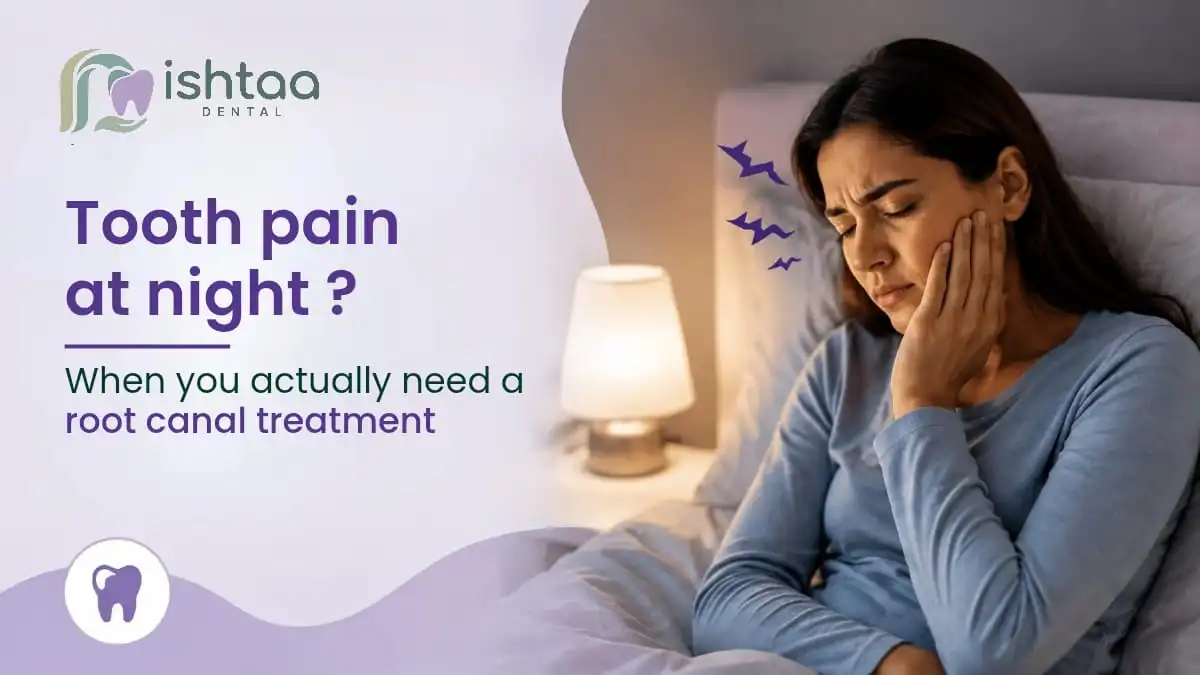
That sensation that you feel in your tooth during the day gradually becomes a dull ache, and turns into throbbing pain when you try to sleep. For many, it is the moment when they know that something more serious could be happening with the tooth.
In some cases, a nighttime toothache may be an indicator that you need a root canal. Many people fear tooth extraction, but in reality, today’s dental care has turned that experience very seamless. Root canal treatment is designed to eliminate pain, not create it.
Leaving the most important warning signs would lead to the infection getting deeper into the tooth as well as the nearby gums. It just makes it tough and complicates treatment. This guide will help you know what reasons for root canal treatment are and why early dental visits are important.
A root canal is a dental procedure that involves the removal of infected or damaged pulp from inside a tooth. Pulp is a soft tissue inside the innermost part of the tooth, which contains nerves and blood vessels.
In fact, it can be very severe when this tissue is infected due to deep decay. Without treatment, the infection will spread. The treatment is done through an opening the dentist makes in the tooth to expose and remove the infection, then clean and sterilise the inside of the tooth, fill the canal to stop bacteria from increasing and seal the tooth in place, usually with a crown so as to restore full strength.
Tooth pain worsens when you lie down. Many patients say that their tooth pain gets worse as they rest horizontally. And that is largely because of blood circulation and gravity.
When you are horizontal, blood flows to your head more easily, elevating pressure on delicate areas like an infected tooth. And then, there’s the distraction factor. Mild pain is easily ignored on a busy day. Pain on a serious level that you cannot rest upon, strongly suggests deep decays or an abscessed tooth.
If the pain wakes you at night, or stops you sleeping do not leave it. Book a dental appointment the following morning.
Many reasons could require a root canal. Infections usually begin small and escalate because of a neglected or injured animal.
So even, if the nerve ‘dies’ and the pain goes automatically away, you have an infection and actively spreading.
Abandoning an infected tooth can lead to disastrous effects, such as:
Treatments are rendered promptly to save the tooth to avoid far more costly dental work down the road.
So what does a root canal treatment entail? It sounds scary, but the actual procedure is quite similar to getting a regular dental filling.
Root canal therapy preserves your natural tooth and enables you to continue smiling for years to come.
Myth #1: Root canals make you sick
This assumption has been roundly discredited by contemporary studies. Removing the source of infection is health-enhancing, not disease-causing elsewhere in the body.
Myth #2: Extractional is generally the better option
Once a tooth is lost, neighbouring teeth move around and the bone starts to shrink. Dentistry has come a long way and modern-day dentists will always strive to salvage the tooth if it can be helped.
Root canal treatment is usually performed under local anaesthesia and has minimal or no pain associated with the procedure. Most Patients who come in with any dental pain say they feel relief instantly.
Sessions typically run between 1 and 1.5 hours long. Based on the complexity of the root structure, it could take one to two visits.
Right after this, you should refrain from chewing on that tooth until your permanent crown is cemented into place. After that, you can go back to eating all of your favourite things without restriction.
Costs depend on the tooth involved and the complexity of the roots. However, it consistently has a lower cost than replacing a missing tooth with an implant.
Conclusion
Do not ignore tooth pain at night, no matter how often it comes back. Your body is sending a clear Indicate that there is a problem within the inner tooth.
Dentists perform root canal treatment to help relieve pain, remove infection, and save your natural tooth. The sooner this problem is solved, the less painful and faster the recovery will be. If you are in significant pain, swelling or prolonged sensitivity, do not delay. Early dental visits prevent severe threats and keeps your smile for a lifetime.